The Chope Collection has sat in the Juniper Room at Bideford Library for decades. Around 500 volumes of North Devon history, assembled by one man, historian and folklorist Richard Pearse Chope, and given to the people of his most local town. It is a remarkable resource, and until this August it had never really been looked at by local young people at all.
That changed over two days in August, when seven young people aged 14 to 19 arrived at the library as the newly formed Explorer Team for Bideford Retold. The 12-month project is run by the charity Libraries Unlimited with dBs Pro, the creative studio of dBs Institute, and is funded by The National Lottery Heritage Fund. Libraries Unlimited runs 54 libraries across Devon and Torbay, and is delivering Bideford Retold in partnership with Space Youth Services, Bideford College and the University of Plymouth, with additional support from The Bideford Bridge Trust.
Each of the young people had received a letter before the event, written as an invitation to be curious, to ask questions and to make unexpected choices without worrying about having the right answer. They were joined by three history interns who had recently graduated from Plymouth University, heritage expert and BBC producer Jo Loosemore, and a group of working creatives including writers, visual artists, composers, game developers and sound artists. Several of those creatives were dBs Institute graduates.
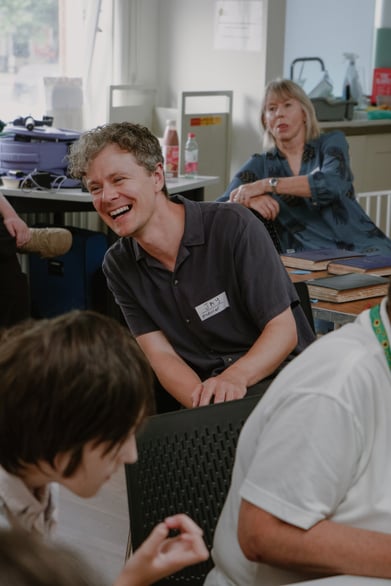
The session opened with everyone in the room introducing themselves and describing Bideford in two words.
"It was a simple way of putting the young people and the adults into the same space," says producer Jay Auborn. "It immediately put their own experience of Bideford alongside the historical material we were about to encounter."
Follow your instincts
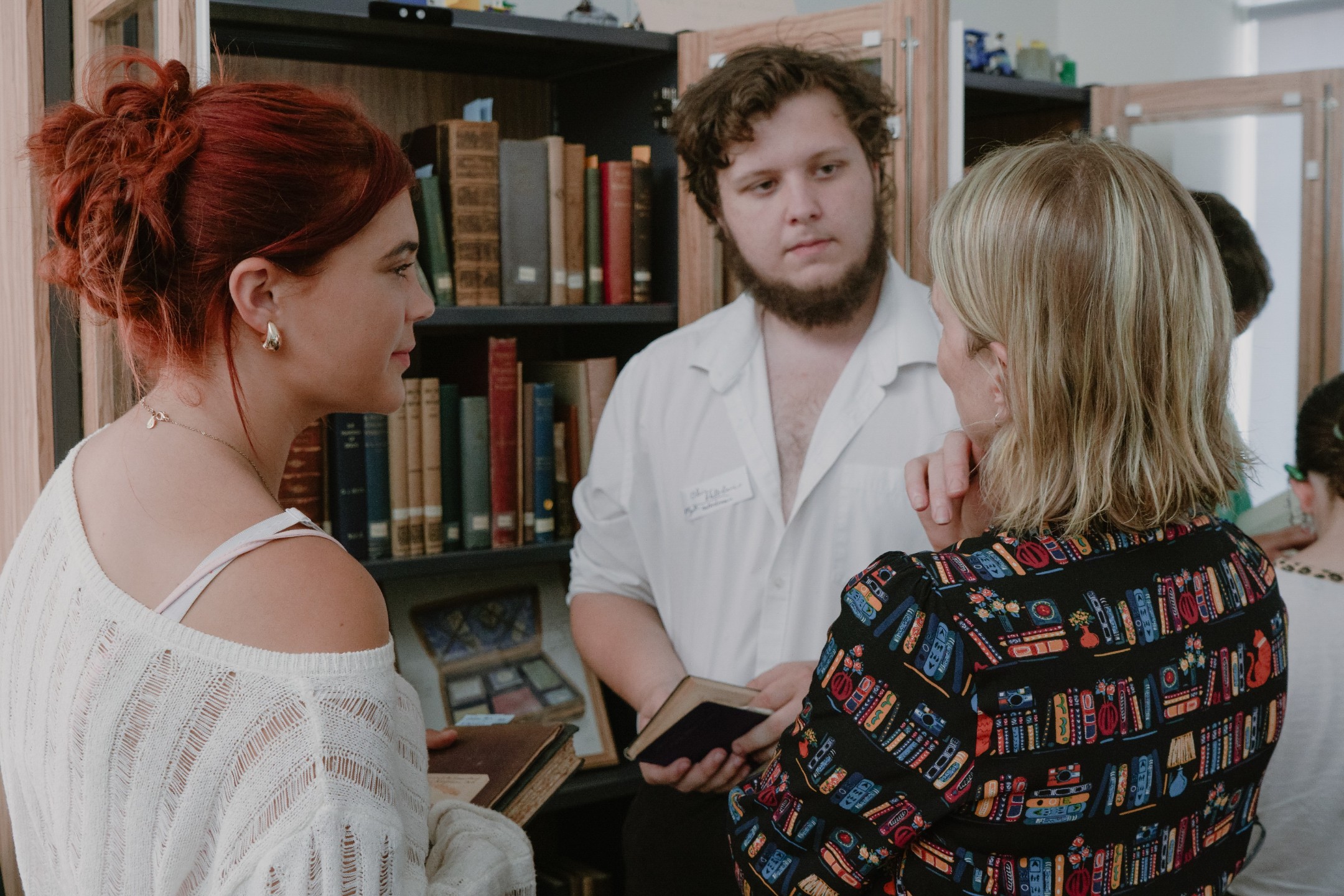
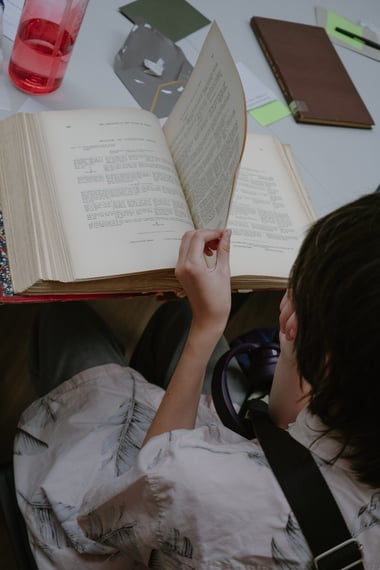
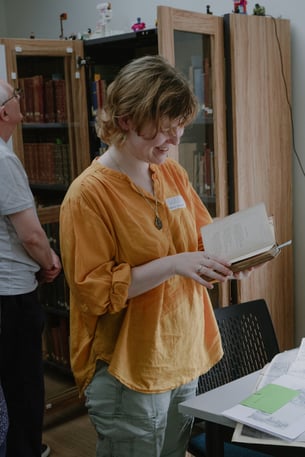
Rather than being asked to identify the most historically significant books, the Explorer Team were asked to look for anything that spoke to them. This could have been a title, the physical feel of a book, an illustration, a note in the margin, a letter or clipping left inside or something they could connect to their own lives.
What surprised them, Auborn says, was how personal the whole collection turned out to be.
"Almost every book carries some trace of Chope himself. His unique book stamp, his notes in the margins, underlined passages, newspaper clippings, letters and references to other books in the collection. There isn't really a book in there that hasn't been made into a personal artefact in some way. It's his personal internet on North Devon history."
Some volumes are beautifully preserved. Others are barely held together by a thread, and a few contain fragments of older printed material used in their construction. There was a great deal to look at before anyone started reading.
"I think the young people initially saw 500 dusty old books," Auborn says. "By the end, they were much more interested in Chope himself. What kind of person he was, why he assembled this collection, why he cared about these particular things, and why he chose to give it to the people of Bideford. The books became a way into the life of a local person."
One of the young people summed it up during the session: "History is about people."
The vote
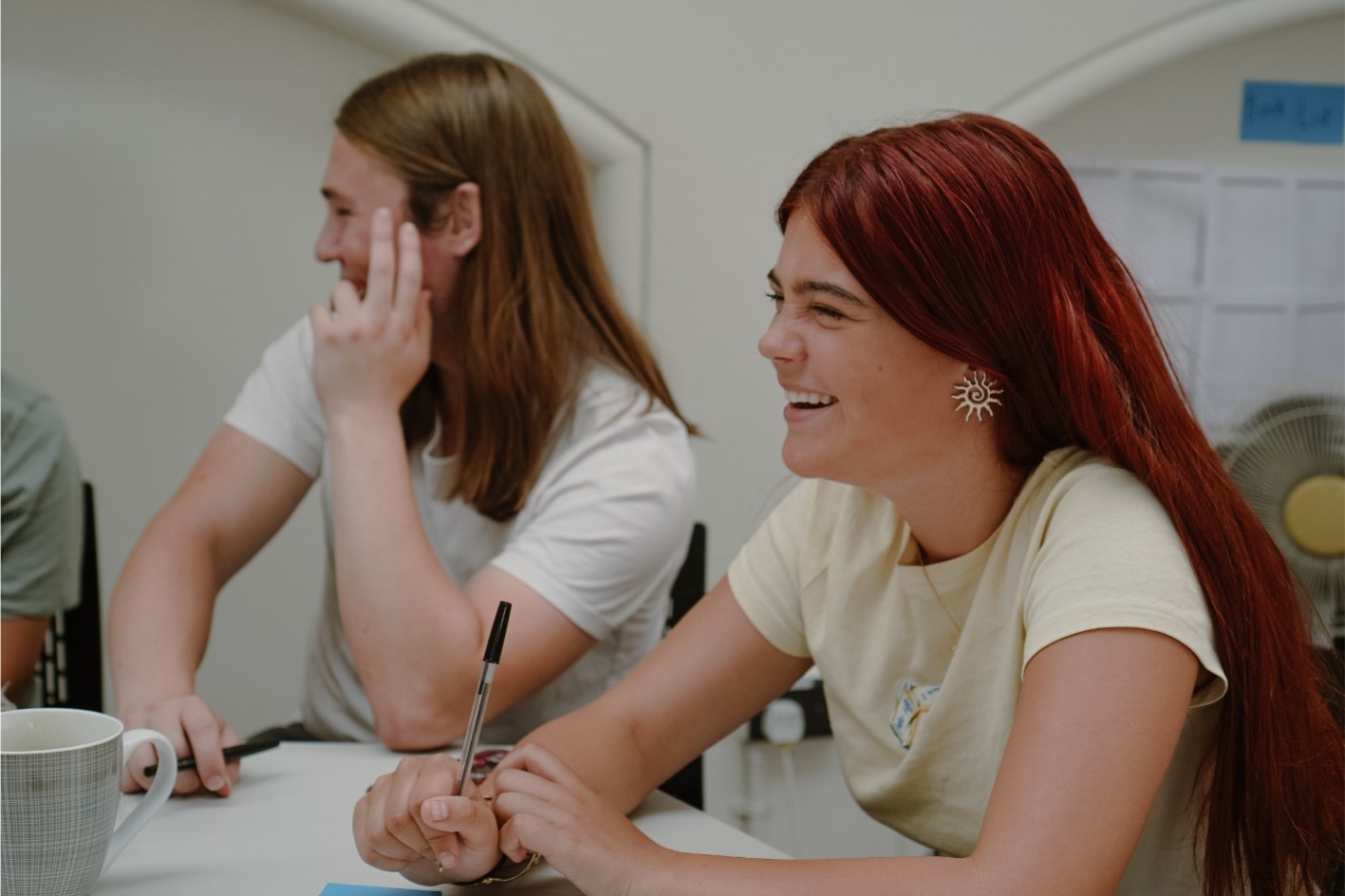
Over the two days, the Explorer Team each picked out a book or two, and the creatives and historians put forward their own suggestions, explaining how they might respond to them. Lulu, a composer and dBs graduate, found musical references inside one book and showed the group how she would use them as the basis for new music.
Then the young people debated, justified their choices and voted, arriving at ten books for what the project is calling the Youth-Curated Chope Collection.
The result Auborn did not see coming involved a book his own team had introduced. Ballads Weird and Wonderful was assembled by Chope himself, illustrated by Vernon Hill, and exists in only around 500 copies. It looked like an obvious catalyst for a creative project.
The young people liked it. Then they voted it out.
Their reasoning was that the Chope Collection responds very specifically to the history and identity of North Devon, whereas the ballads in that particular book were Scottish in origin. If Chope had wanted it in the collection, they argued, he would have left it there himself.
"I found that incredibly moving," Auborn says. "They weren't simply choosing the things they liked best. They had started to feel a responsibility towards the collection and towards the people who would encounter it after them. They were prepared to reject something visually exciting because they didn't believe it belonged."
The debate was facilitated by Alison, a local youth worker from Space. Auborn says he mostly stood back and watched.
"It was one of those moments where you realise the young people have taken ownership of something. This shows the project working already, before we've even made any sound, music or art."
Listening through a microphone
With the ten books chosen, the group moved from the library to Bideford Harbour and aboard the SS Freshspring, the 1946 steamship that is the Royal Fleet Auxiliary's last surviving steam water-tanker.
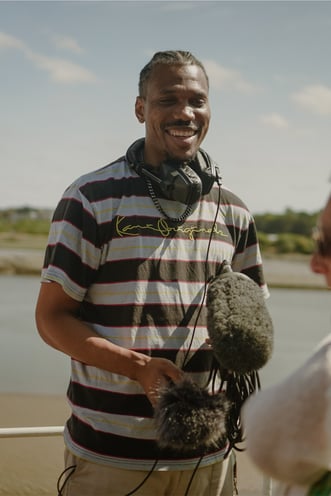
The workshop was designed by MA student and sound artist Sara Aquino as part of her role on the project. Armed with handheld field recorders, the young people were sent to hunt around the ship with their ears, working to prompts such as long, low and rhythmic, capturing the machinery, the movement, the surfaces and the small sounds that make a place what it is. Aquino and the dBs Pro team then assembled the recordings into a soundscape.
For Auborn, the value of putting recording equipment into inexperienced hands has little to do with the equipment.
"The interesting part isn't learning how to operate the machine. It's what happens when you start listening through a microphone with headphones on. Suddenly you're not listening with your own ears, you're listening through another perspective. The microphone becomes a fly on the wall. You listen and get outside your own head."
He thinks that this observational role suits young people.
"You don't have to direct something or perform. You can just listen. And once you start listening like that, the world becomes full of things you hadn't noticed before."
Why young people, and why now
Bideford, like many rural towns, can feel remote from the places where creative technology and creative careers are visible.
"Sometimes the biggest barrier isn't access to information," Auborn says. "It's having a reference point, or a peer with a different experience to share. If you've never met a sound artist, game developer or creative producer, it's difficult to imagine yourself becoming one."
He gives an example from an earlier workshop, where a young person could not see how anyone could afford to live and study at university. One of the dBs students explained what a typical week actually looked like, working around studying. "And they got it. That's hard to find unless you're connecting to people."
There is also a point about taking young people's interests seriously. Music, games, technology and making things can be treated as distractions from more serious subjects. Bideford Retold is built on the opposite assumption.
"These things are valuable. They can become skills, creative practices and careers," Auborn says. "I think the world needs more artists, especially right now."
Putting young people at the centre rather than at the end also changes what the project produces. "If young people are only the audience, you're waiting until the end to ask whether you've connected with them," he says. "They'll want their friends and families to see what they've made. So we're not building an audience for a finished artwork. We're building an audience while we're making it."
What happens next
The ten books chosen by the Explorer Team will be made available in the main library, where people can encounter them without needing access to the Juniper Room, which is in regular use by the local community.
Those ten now go to a public vote. People across Bideford are being asked to choose three, and those three will become the focus of the next stage of the project, when artists and creatives will be commissioned to respond to them, and work begins on the final experience for the library.
Free co-creation workshops for young people in Bideford run in the last week of October, working with dBs students and professional creatives across sound, music and technology. Regular Open Studio sessions offer a more flexible way in, with drop-in access to whatever the project is working on at the time, from editing sound to developing ideas. The first of seven podcasts will be produced over the coming year, and the Youth Advisory Board will continue to shape the project as it develops.
"Missing First Look doesn't mean you've missed your chance," Auborn says. "We're just getting started."
Bideford Retold is made possible thanks to The National Lottery Heritage Fund. Thanks to National Lottery players, the project is revitalising the Chope Collection at Bideford Library and bringing its stories to life through creativity, digital media and collaboration with young people across North Devon.