Sound design for games and films are both built on the same fundamental craft - the ability to create, shape and manipulate audio in service of a larger creative work. But spend any time talking to people who do one or the other professionally, and it quickly becomes clear that sound design for games and sound design for film are genuinely different disciplines, with different tools, different workflows, different ways of thinking, and different demands on the people who practise them.
Understanding the distinction matters whether you are a student trying to figure out which path to pursue, someone mid-career considering a move between industries, or simply someone who wants to understand how the audio in their favourite game or film actually gets made.
What both have in common
Before getting into the differences, it is worth being clear about the shared foundation - because it is significant. Whether you are working on a Hollywood blockbuster or a triple-A game title, the core skills required are essentially the same: a well-trained ear, a fluency in recording and editing audio, a working knowledge of synthesis and sound manipulation, and the creative instinct to build something that serves the project rather than drawing attention to itself.
The tools overlap considerably too. DAWs like Pro Tools and Reaper are widely used across both industries, and the techniques used to capture, layer and process sound, field recording, foley, synthesis, and editing translate between them. As dBs guest lecturer and video game sound designer Bjørn Jacobsen puts it: "The way in which you create sound can be translated across all roles."
How film sound design works
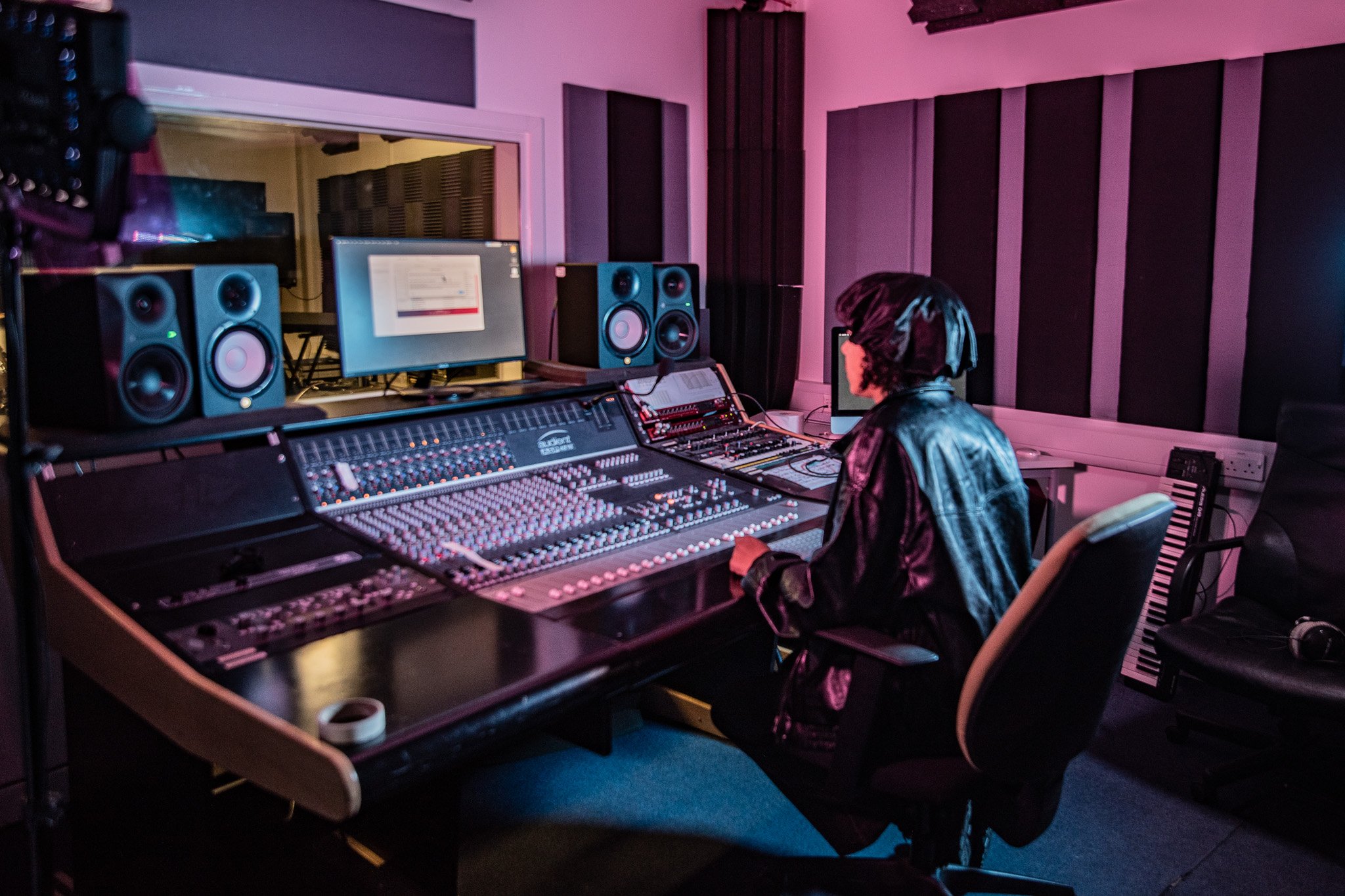
Sound design for film and television is a post-production discipline. By the time a sound designer gets their hands on a project, the picture is largely locked, meaning the images are fixed, the edit is done, and the sound designer's job is to build the entire sonic world on top of it. That world includes everything from the ambient texture of a scene to the specific sound of a punch landing, a car engine turning over, or a creature that has never existed making a noise that no one has ever heard before.
The process typically begins with spotting, going through the film with the director and supervising sound editor to identify every moment that requires a sound decision. From there, the work divides into recording (capturing real-world sounds on location or in a foley studio), editing (assembling and trimming those sounds to fit the picture precisely), and mixing (balancing everything together so that dialogue, music and effects work as a unified whole).
The relationship between sound and picture in film is fixed; once the edit is locked, a footstep lands on a specific frame, a door closes at a specific moment, and the sound designer's job is to serve that moment precisely. There is little ambiguity about what is needed, the challenge is finding or creating the right sound and placing it with the right level of precision and craft.
Film sound design also tends to operate within a clear creative hierarchy. There is typically a supervising sound editor or sound designer who carries the overall vision for the film's audio, working directly with the director, and a team of specialists, foley artists, dialogue editors, ADR supervisors, and re-recording mixers beneath them. Understanding where you sit within that structure, and what your specific responsibilities are, is part of what makes working in film sound manageable across very large projects.
How game sound design works
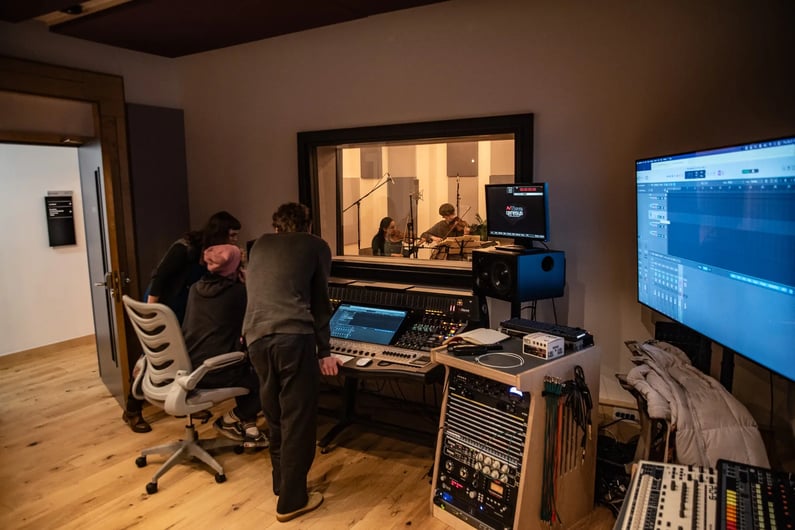
Game sound design begins from an entirely different premise, and that difference shapes almost everything else about how the job works. Where film audio is linear (it plays from beginning to end in a fixed sequence), game audio is interactive. The player makes decisions that affect what happens on screen, which means the sound designer cannot know in advance which sound will play when, or in what order, or how long a particular sound will need to loop.
This introduces a layer of logical and systems-based thinking that has no direct equivalent in film. Game sound designers do not just create sounds; they implement them into audio middleware platforms like Wwise and FMOD, which act as the bridge between the audio assets and the game engine itself. In Wwise or FMOD, a sound designer builds the logic that governs how audio behaves: when a footstep plays on grass versus concrete, how music transitions as a player moves between areas, how a weapon sounds different depending on whether it is fired indoors or outdoors. Getting that logic right requires a combination of creative and technical thinking that is genuinely unusual.
Game sound design is also typically an earlier-stage process than film sound design. Sound designers working in games are often embedded within the development team for months or years, working alongside programmers, designers and artists as the game itself evolves. That means the sound designer's work changes constantly as assets are replaced, scenes are redesigned, features are cut or added, so the ability to adapt, iterate and maintain a coherent audio identity is a skill that is desirable in this industry.
Where sound design for films and games overlap and where they diverge
Both film and game sound designers spend significant time in a DAW, recording and editing audio. Both use synthesis, field recording and foley techniques to build their sound libraries. Both need a working knowledge of audio processing, EQ, compression, reverb, and convolution to shape sounds to the needs of a project.
Film sound designers work primarily within their DAW and a linear post-production workflow, delivering finished stems and mixes to a dubbing stage where the final mix is assembled. Game sound designers move between their DAW and an audio middleware platform, building interactive systems rather than finished mixes, and increasingly, they also need a working knowledge of scripting and visual scripting tools within the game engine itself.
Which should you choose?
The honest answer is that the right path depends on where your instincts already sit. If you find yourself drawn to narrative, to the idea of building audio that serves a fixed story, and to working within a structured post-production workflow where craft and precision are the primary demands, film and television sound design is the more natural fit.
If you are as interested in systems and logic as you are in sound itself, if the idea of designing audio that responds dynamically to a player's behaviour genuinely excites you, game sound design is likely where you belong.
Study sound design at dBs Institute of Music
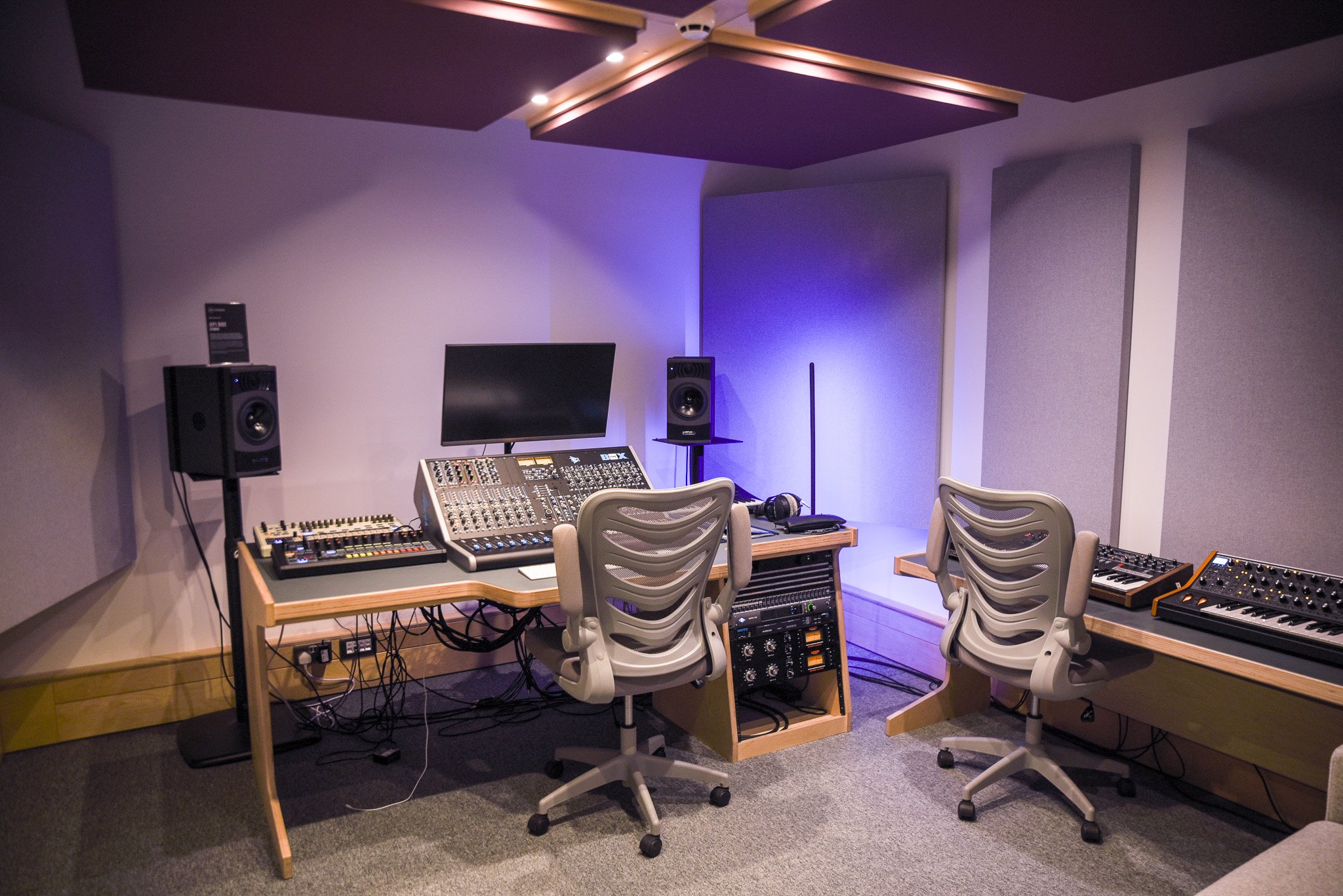
At dBs Institute of Music, we offer industry-focused degree-level courses designed to develop the technical skills, creative instincts and professional awareness that sound design careers in both games and film demand. Our BA (Hons) Music Production and Sound Design equips you with practical and theoretical knowledge across audio creation, manipulation and implementation, covering studio and location-based recording, hardware and digital synthesis, and immersive audio production, taught by working professionals including practitioners from both the games and film industries.
We run regular Open Days across our campuses in Bristol, Manchester and Plymouth so you can come check us out for yourself.