The dBs Bristol Electronic Music Production graduate spent six months building a pocket four-track recorder for iPhone. In May it launched at number one in 13 countries. We asked him how it happened.
When Tugkan Mutlu enrolled on the Electronic Music Production course at our Bristol campus, he thought he was heading towards life as a producer and a DJ. What he found instead was a way of thinking about sound, software and design that would eventually lead somewhere he hadn't planned: building his own app.
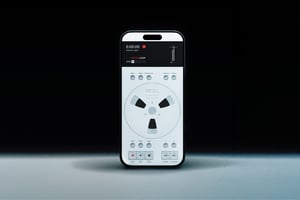
That app is Reel, a tape-style four-track recorder for iPhone. It launched in May 2026 and reached number one in the Top Paid Music Apps chart in 13 countries, with a place in the top 10 in 42 more. Reel grew out of a love of hardware and a frustration with its limits, and Tugkan spent six months building it more or less single-handedly.
We recently caught up with him to talk about where the idea came from, what it takes to build a music tool from scratch, and what his time at dBs had to do with all of it.
What was the moment Reel started taking shape as an idea?
It was a project that combined all my passions, skills and experiences from the past. I run a design studio, and I had a year-long contract with a corporate tech company where I was lucky enough to head the branding, and later the creative vision and product strategy. During that time I got pretty obsessed with product design and engineering, and I had the opportunity to work closely with engineers and shape the development of the products. When the contract finished, I wanted to expand into offering software product design and development services. That's where one part of the idea came from.
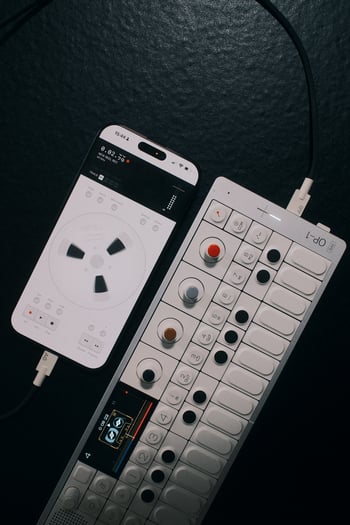
The other part was a frustration I had with my Teenage Engineering OP-1 Field. I travel and move around a lot, and I love the OP-1 Field as a portable device. One of its frustrations is that you can only create four projects on it, and it has a limit of four tracks. That can be great for creativity, but not being able to start a new track kind of killed the creativity for me. So the combination of the two was the perfect spark to start Reel.
You studied Electronic Music Production at our Bristol campus. How did that time shape the way you approach building things for other musicians now?
I don't think I would be here, or have built Reel, without my experience at dBs. The Electronic Music Production course opened up my sense of what is possible beyond becoming a producer and a DJ, which was my way of thinking before I started. I love to learn and get deep into topics, and all the tutors were the top geeks and music encyclopaedias in their field. I loved the experimental modules with Emmanuel, for example. His approach to sound and design, and to what is possible, felt endless, and it constantly sparked my curiosity and creativity. That academic, deeper approach to how sounds, synths and software all work on a technical level gave me the ability to design and understand the architecture logic that goes into audio software development.
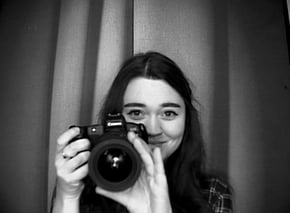
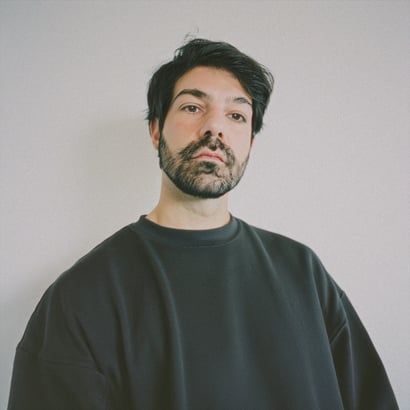 Image of Tugkan Mutlu
Six months from concept to launch is quick. What did the development process actually look like day to day?
I went into a bit of a cave with this one. I had been toying with the idea before, but for the last six months I locked myself away, probably working 10 to 12 hours a day in the development phase. I was obsessed and determined to create the product, because it would expand my own workflow.
Day to day, it looked like waking up, opening my laptop and Xcode, and letting time fly by until 5pm. Then I would eat for an hour and catch up with my partner, and after that keep working until I went to bed. Sometimes I wanted to work weekends, but I tried to be sensible and take them off to avoid burnout. There were days where I would spend a day or two trying to fix something, only to make it worse and feel like giving up. Then you wake up the next day and something just clicks and you fix it. That high became addictive!
You worked with 115 beta testers in the run-up to launch. How did that community come together, and what did their feedback change?
I'm pretty active on Reddit in the r/teenageengineering community, and I posted what I thought was a close-to-finished first version of the app. That post did really well and hit the r/popular page. A lot of the community in that subreddit also owned OP-1 Fields and felt the same frustration I did, so I guess it appealed to them. A lot of people commented asking to test it, and that's how the beta community developed.
Without the beta feedback, the app would not be where it was at launch. I thought it was stable and ready, but the beta testers were amazing at finding bugs and edge-case issues, and at giving really good suggestions.
The tape-style aesthetic and pocket form factor feel very intentional. What were you trying to get at about how musicians actually capture ideas?
Yes, it was all very intentional. I'm a product designer and a graphic designer, so design philosophy is something I care about a lot. I love hardware, and in Bristol I built up a really nice studio full of synths, drum machines and mixing desks. Something about the limitations of hardware, and the way you interact with it, is always hard to replicate with DAWs and plugins. I wanted to challenge myself to bring some of that hardware soul and intuitive design into a software environment, and to make it intentional for the device you use it on.
Reel is the introduction product for iPhone, and it has been designed specifically for iPhone. There is a famous saying in the camera community: the best camera is the one you always have with you. That was an inspiration for making a pocket four-track you can take anywhere, and record with your instruments or just the device on its own.
What's next for Reel after launch day?
The launch was a success. Reel reached number one in the Top Paid Music Apps chart in 13 countries, including the UK, US, Canada, Sweden and Spain, and the top 10 in 42 countries. We also got a feature on MusicTech.com and Gearspace, which helped.
I now have a huge backlog of developments to work on. This is a v1.0 release, so it really is only the beginning, and I'm planning to keep developing the app continuously. Most of the feature requests are coming from users and beta testers, and if it makes sense to add something, I will. There is also a native iPadOS version in development, though I don't want to say too much about that yet, and we've added an Android version to the roadmap so the app reaches more people in future.
If a current dBs student came to you with their own product idea, what would you tell them?
Just get started, and don't overcomplicate it. Download your development environment, set up your folders and make a start. Be consistent, because it is a lot of work, but it's really pleasing if you stay in a consistent flow state.
And ask people to test it and give feedback. That's one of the most important things not to overlook. You get so deep into the app while developing it that it becomes hard to see it from an outside user's point of view.
Reel is available now on the App Store. You can find out more through the links below.
Find out more about Reel
- Website: reelaudio.app
- App overview video: watch on YouTube
- YouTube channel: @24bitStudio
- Reddit community: r/reelapp
- Instagram: @reelaudio.app
SHARE NOW