
With the UCAS Equal Consideration Deadline 2025 fast approaching, now's the time to get your application in order. Whether you're wondering when exactly the deadline is, or trying to work out how to calculate UCAS points, we've got you covered with everything you need to know before the big day.
When is the UCAS Deadline?
The UCAS Equal Consideration Deadline for September 2026 entry is 6pm on Wednesday 14th January 2026. This is the key date to remember if you want your application to be considered alongside everyone else applying for courses starting in autumn 2026.
Don't panic if you miss this date, though: you can still apply after 14th January. However, places may be limited on popular courses, so it's definitely worth getting your application in before the deadline if you can.
The main UCAS cycle runs until 30th June 2026, after which applications automatically go into Clearing.
How to Calculate UCAS Points
UCAS points are the currency of university applications: they're a way of measuring the value of all post-16 qualifications in the UK. Your grades from Level 3 qualifications like A-levels, BTECs, or the International Baccalaureate are converted into a numerical score.
Working out your points is straightforward: Use the UCAS Tariff Points Calculator to see how many points your qualifications are worth. Simply enter your predicted or achieved grades, and it'll tell you your total.
At dBs Institute of Music, we ask for 96-112 UCAS points for most of our undergraduate degrees. But here's the thing: we consider every application on its own merit. Your passion for music and sound, your experience, and your potential all matter just as much as your grades.
Applying to dBs Through UCAS
Ready to start your music production, sound engineering, or live sound journey? Here's what you need to know about applying:
Getting Started
All applications to dBs undergraduate programmes go through UCAS. You don't need to complete everything in one sitting, just make sure to save your progress and come back whenever suits you.
You'll need:
- Your qualifications – list everything you've completed or are currently working towards
- Your personal statement – this is your chance to shine and show us why you're passionate about music and sound. Check out our guide on How to Nail Your Personal Statement
- A reference – if you're in education, your school or college will provide this. If not, we accept references from employers or professionals who know you (but not family or friends)
- Course codes – you can apply to up to 5 courses. Our institution code is D16 and you'll find individual course codes on our course pages
The Application Fee
UCAS charges £28.95 for applications with up to 5 course choices. If you've received free school meals at any point during your secondary education, you may be eligible for a fee waiver. Find out more on the UCAS website.
What Happens After You Apply?
Once you've hit submit, you'll hear from both Falmouth University (our validating partner) and the dBs Admissions team via email. Keep an eye on your inbox!
You can track your application through:
- Your UCAS Hub – using your Personal ID and password
- The Falmouth University Applicant Portal – you'll receive login details via email
Interviews, Portfolios & Auditions
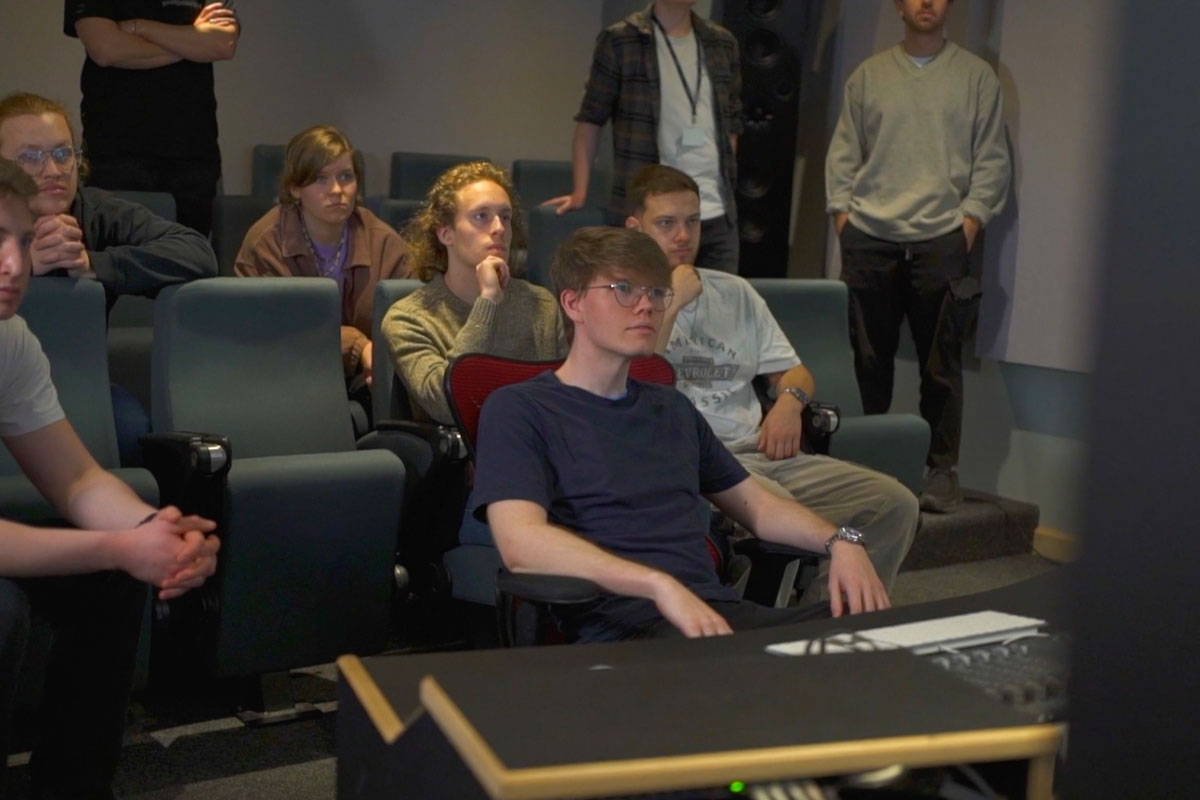
We interview for all our courses because we want to get to know you beyond the grades. It's a relaxed chat about your aspirations, what excites you about music and sound, and your potential. You can meet us in person at one of our campuses in Bristol, Manchester, or Plymouth, or join us online.
Some courses also require a portfolio or audition. We have detailed guides for:
- Live Sound degrees
- Music & Sound for Film & Game
- Music Performance, Songwriting & Vocal Artistry degrees
- Music Production degrees
If you can't make your interview slot, just email admissions@dbsinstitute.ac.uk and we'll arrange another time.
Don't Have Enough UCAS Points?
No stress. At dBs, we welcome students from all educational backgrounds. We look at the whole picture: your experience, your circumstances, and your potential.
Your options include:
- APEL (Accreditation of Prior Experiential Learning) – if you have relevant professional or personal experience but no formal qualifications
- Our Access to Higher Education courses – one-year programmes in Music Production, DJ & Electronic Music Production, or Music Performance & Production that give you the technical foundation and qualifications to progress to a degree. Find out more about our Access to HE courses here.
Get in touch with our Admissions team to discuss what might work best for you.
Key Takeaways
- The UCAS deadline 2025 for equal consideration is 14th January 2026
- Calculate your UCAS points using the official calculator
- dBs requires 96-112 UCAS points, but we consider every application individually
- Apply through UCAS using institution code D16
- You'll need a personal statement, reference, and details of all your qualifications
- Everyone gets an interview – in person or online
- Alternative routes available if you don't meet standard requirements
Ready to Apply?

Don't let the deadline creep up on you. Start your application now and take the first step towards turning your passion for music and sound into a career.
Need help with your application or have questions? Our Admissions team is here to support you every step of the way:
- Email: admissions@dbsinstitute.ac.uk
- Call: 0161 552 6467
SHARE NOW